


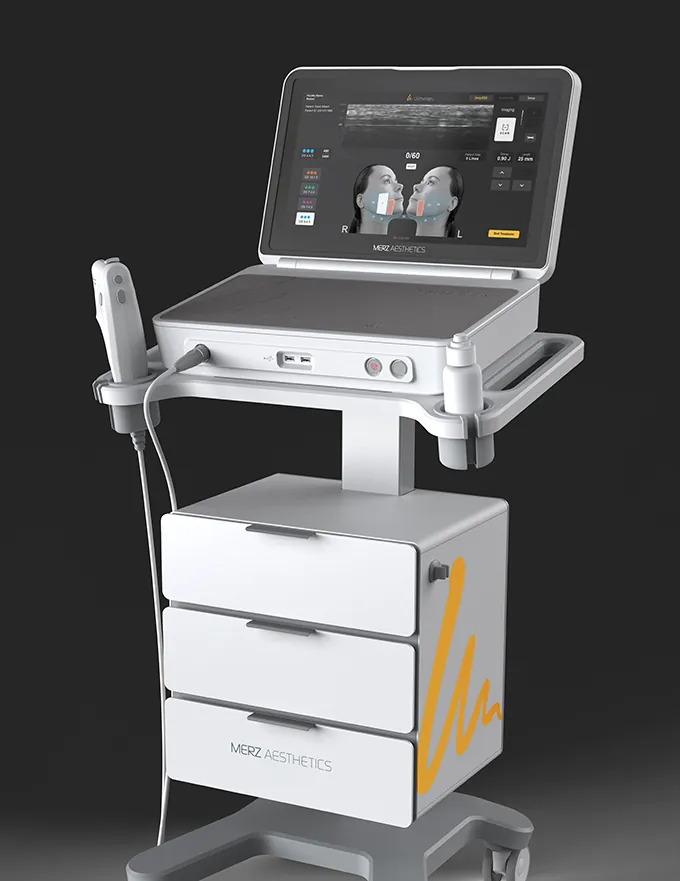
Compared with the original Ultherapy, Ultherapy PRIME has sharper, faster DeepSEE monitoring, shortening treatment time by about 20 to 35%, and can show skin layers up to 8mm deep. Shorter treatment time and more precise targeting of the SMAS layer have reduced the burden of pain, and to get better results it is important to monitor throughout the procedure and adjust the energy for each area.
Hello, I'm Dr. Doo-jin Oh, a board-certified dermatologist practicing in Cheongdam.
Ultherapy PRIME is drawing a lot of attention as the first renewal of Ultherapy in the 15 years since its launch.
Since Ultherapy has changed for the first time in 15 years, people seem curious about what has changed, and since many have worried about pain with Ultherapy, how much less painful Ultherapy PRIME is. So I'd like to explain.
Ultherapy vs. Ultherapy PRIME: the differences

The biggest difference between Ultherapy and Ultherapy PRIME is the improved monitoring function called DeepSEE.
Compared with the original Ultherapy device, monitoring is clearer, monitoring and firing speeds are faster, and skin layers can be seen at greater depths.
As a result, treatment time is shorter, and it can be used more effectively in middle-aged and older patients with deep wrinkles and pronounced contours.
< Changes from the improved DeepSEE >

1) Less noise, for a clearer view of the skin layers
: With less noise, the skin layers can be seen clearly, allowing the correct layer to be targeted precisely.
The more noise there is, the harder it is to identify internal tissues accurately, lowering the chance of targeting the intended location.
In that sense, the more accurately the skin layers can be seen, the more precise the targeting and the better the results.
Seeing the skin layers accurately also helps reduce side effects such as hollow cheeks caused by excessive fat destruction.

2) Faster monitoring & firing speed
: The speed of viewing and monitoring beneath the skin has increased and the interval between shots has shortened, reducing treatment time by about 20 to 35% compared with before.
Shorter treatment time means less time exposed to pain, which reduces discomfort.
Ultherapy is a lifting laser with such a reputation for pain that some people look for clinics offering 'conscious sedation,' commonly called sleep sedation.
So less pain can also be said to lighten the burden of Ultherapy treatment.

3) Skin layers visible up to 8mm deep
: The original Ultherapy could show skin layers to a maximum depth of about 4.5mm.
The new Ultherapy PRIME, however, can show skin structure up to 8mm deep.
This makes it possible to accurately see and target areas where wrinkles are deep, such as nasolabial folds, forehead lines, and lines around the mouth, as well as the SMAS layer that has sagged deeply with age.
Why Ultherapy PRIME is less painful
Ultherapy PRIME is less painful partly because the shorter treatment time reduces how long pain is felt, but also because precise targeting minimizes skin damage.
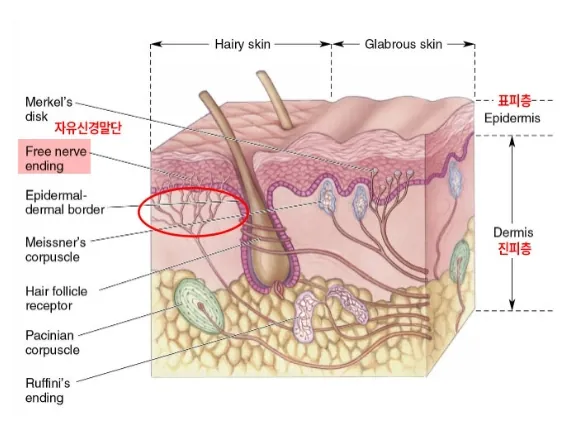
The dermis lies just beneath the skin surface and has such a dense concentration of nerve endings that it can be called a hub of sensation. To protect the body, pain here is felt as immediate and sharp.
The SMAS layer is connective tissue surrounding the muscle, so pain there is mainly felt as a dull, heavy, tightening ache.
Many people worry about Ultherapy because of its stabbing pain, but precisely targeting the SMAS layer can reduce the sharp, tingling pain that causes the most discomfort.
Accurately targeting while avoiding bone and blood vessels also minimizes problems such as swelling.
That is why Ultherapy is a lifting device that must be used with continuous monitoring.
How to get better results from Ultherapy PRIME
To say it once more, getting better results from Ultherapy PRIME requires continuous 'monitoring.'
Constantly checking the skin layers through monitoring throughout the procedure and adjusting the energy settings to match is one of the best ways to achieve strong results.
Occasionally, however, some clinics do not monitor this way, glancing at the screen only now and then and relying on feel, and with that approach it is hard to get the full benefit of Ultherapy PRIME.
Even within one cheek, skin thickness differs between the area near the cheekbone and the area near the jaw.
With nasolabial folds, the skin thickness of the fold itself and of the area connecting the fold to the cheek varies greatly depending on the pattern of sagging and the amount of fat accumulation.
These differences are hard to handle by feel, and considering that a difference in thickness of just a few tenths of a millimeter can change the target position, monitoring frequently and continuously adjusting the energy settings to the skin's condition during treatment can improve the lifting results.
Frequently Asked Questions
- How is Ultherapy different from Ultherapy PRIME?
- The biggest difference is the DeepSEE monitoring function. With less noise, skin layers are seen more clearly, monitoring and firing speeds are faster, and the visible depth has increased from a maximum of 4.5mm to a maximum of 8mm.
- Is Ultherapy PRIME less painful?
- Treatment time is about 20 to 35% shorter than before, so pain is felt for less time. Also, precisely targeting the SMAS layer can reduce the sharp, tingling pain caused by stimulating the dermis.
- How can I get better results from Ultherapy PRIME?
- The skin layers must be checked by monitoring throughout the procedure, with the energy settings adjusted accordingly. Even within the same cheek, skin thickness differs by area, so relying on feel can shift the target position.
